
Reflective signs return vehicle headlights toward the light source, helping drivers identify road information at night. Proper surface preparation, sheeting application and installation are essential for reliable results.
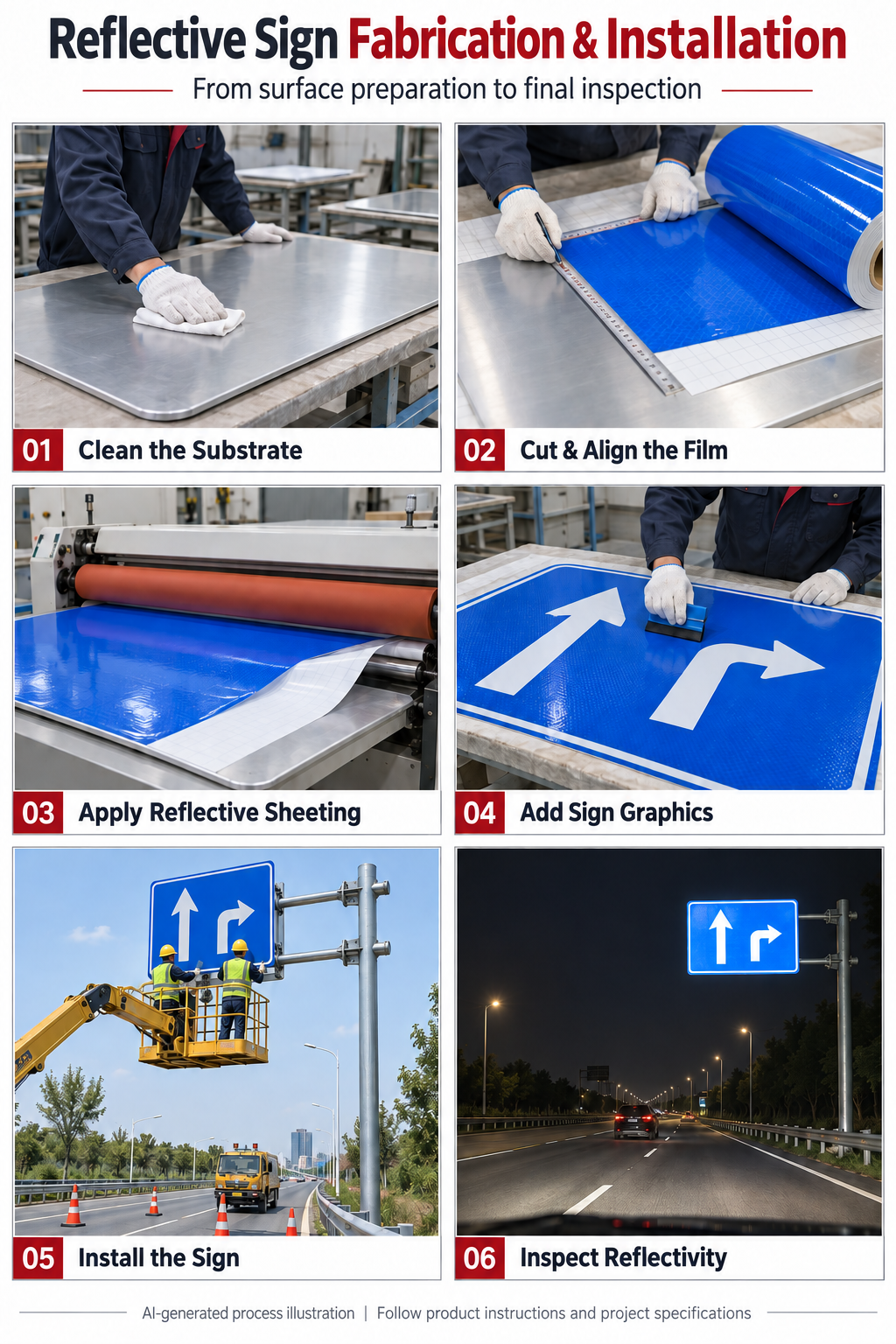
01 | Clean the Substrate
Check that the aluminum sign blank is flat and free from burrs, oil and dust. Clean it with a product-compatible cleaner and allow the surface to dry completely before applying the sheeting.
02 | Cut and Align the Film
Cut the reflective sheeting to the design dimensions, allowing an appropriate trimming margin. Follow the manufacturer’s orientation and jointing instructions to maintain a consistent appearance across panels.
03 | Apply Reflective Sheeting
Peel back the release liner gradually and apply even pressure with a suitable laminator or squeegee to minimize bubbles and wrinkles. Follow the product instructions for application temperature, pressure and whether wet application is permitted.
04 | Add Sign Graphics
Create the lettering, arrows and symbols according to the approved design, using compatible overlay films or printing systems. Check colors, dimensions, positioning and edge adhesion when the graphics are complete.
05 | Install the Sign
Inspect the supports, posts and fixings before installation. Use suitable traffic controls and safe access equipment. Follow the project drawings and local requirements for mounting height, orientation and fastener tightening, and protect the sign face from scratches.
06 | Inspect Reflectivity
Check for bubbles, lifted edges, surface damage and loose fixings. Inspect nighttime visibility under suitable illumination and viewing conditions. Where quantitative acceptance testing is required, use the appropriate measuring equipment and project criteria.
Planning a Sign Project?
Share the sign dimensions, operating environment, required sheeting grade, fabrication method and target-market requirements with Xingyuan when requesting material recommendations or a quotation.
The process illustration is AI-generated. Always follow the technical instructions for the specific sheeting model and the applicable project requirements.