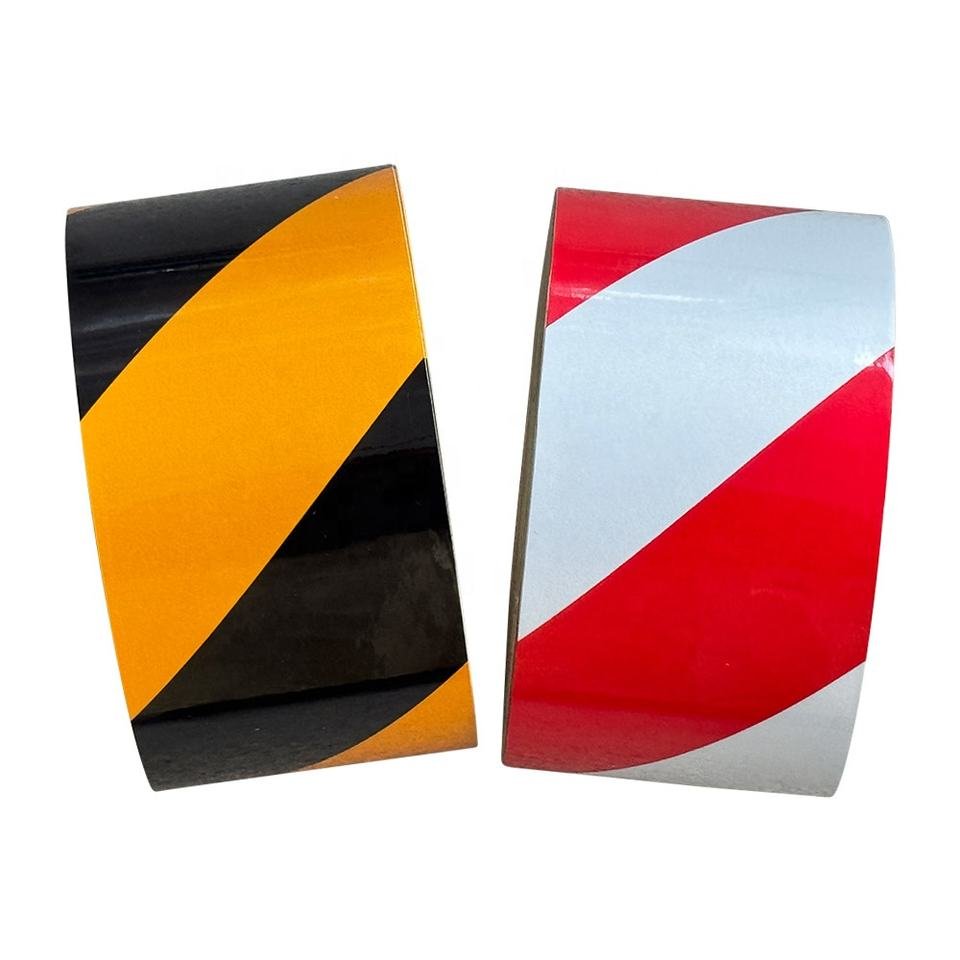
Ordinary non-reflective warning tape relies on its visible color and contrast; retroreflective warning tape also redirects incident light toward its source. Similar yellow-black or red-white stripes can therefore serve different viewing conditions. Ask about the material construction, not just the pattern on the roll.
What changes when the lighting changes?
Under general room lighting, both types may be easy to see because of their contrasting colors. When light is directed toward retroreflective material and the observer is close to that light source, the reflected return can make the reflective areas conspicuous. Reflective tape does not produce its own light and should not be treated as a substitute for required lighting or signs.
Compare the options
| Feature | Ordinary non-reflective warning tape | Retroreflective warning tape |
|---|---|---|
| Primary visual feature | Color and stripe contrast under available lighting | Color contrast plus a directed return of incident light |
| With no illumination | Does not emit stored light | Does not emit stored light |
| Typical reason to consider it | A color-marking task where reflectivity is not required | A marking task where visibility under directed illumination matters |
| Surface checks | Adhesive, finish, exposure and intended use | The same checks, plus the reflective construction and documented performance |
| Information to request | Dimensions, substrate compatibility and installation instructions | Those details plus the reflective colors, model and relevant test data |
Choose the pattern and verify which areas reflect
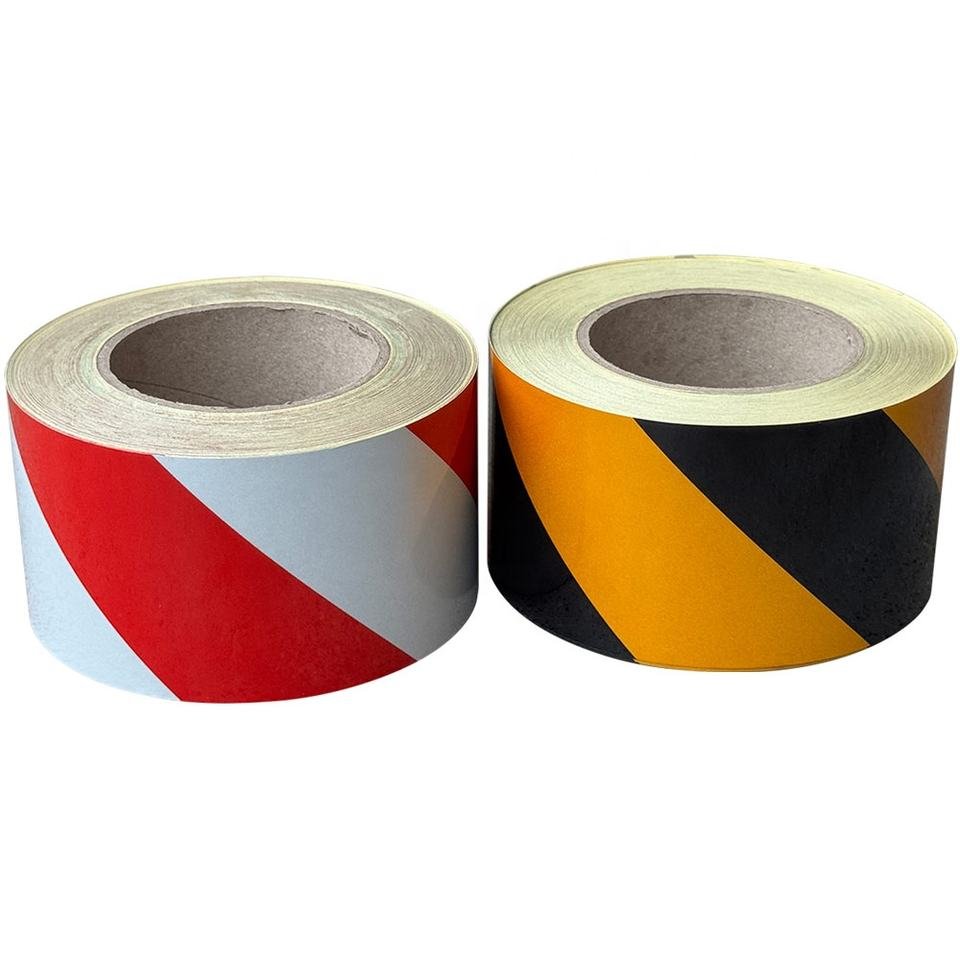
Xingyuan’s yellow-black and red-white reflective warning tape is listed for equipment, barriers and compatible safety surfaces. Confirm the stripe width, direction, repeat pattern and roll dimensions. In a multi-color tape, do not assume every colored area has the same reflective behavior; ask which areas are reflective in the selected construction.
A striped warning-tape pattern is also different from a vehicle marking layout. If you are specifying a truck or trailer, review red-and-white microprismatic truck marking tape and the vehicle’s intended marking arrangement. Do not substitute one product purely because the colors look similar.
Make a simple visual check
Ask for an identified sample of the actual product being quoted. In a safe stationary setup, place it on a representative surface. View it first under ordinary ambient lighting, then direct a flashlight toward it while observing from close to the light source. Move the light or viewing position to see how the appearance changes. If comparing samples, keep their orientation, distance and lighting consistent.
This is a qualitative check of appearance, not a measurement of reflective performance or proof of compliance. Camera flash photos alone are also insufficient: exposure and viewing geometry can change the result. For a specified project, request data for the exact model and color under the required test conditions.
Check the surface before a bulk order
State whether the tape will be used on a painted machine guard, metal barrier, plastic component or another surface. Include the surface finish, indoor or outdoor exposure, cleaning process and contact with water or chemicals. Request the product-specific preparation and application instructions and try a sample before committing to the full quantity.
If the tape is intended for a walking surface, separately confirm suitability for pedestrian use, slip resistance and wear. A product described as reflective warning tape does not automatically provide those properties.
Buyer questions
Does a glossy surface mean the tape is retroreflective?
No. Gloss can produce a bright reflection without establishing retroreflective construction or measured performance. Check the product identity and technical information.
Is reflective tape the same as glow-in-the-dark tape?
No. Photoluminescent tape absorbs light and later emits stored energy as an afterglow. Reflective tape needs incident illumination. Compare the photoluminescent tape range if afterglow is part of the requirement, and request charging and luminance data for the chosen product.
Can I choose by price per roll?
Compare equivalent width, length, construction and intended use. Price per square metre can help compare material quantities, but it does not account for differences in suitability, cutting waste or installation work.
Prepare your enquiry
Send the product link, color, dimensions, quantity, application surface and destination to sales@reflecfilm.com. Xingyuan can use these details to discuss the selected construction and prepare an order-specific quotation. For a ready-to-use enquiry checklist, see Planning Your B2B Order.