Reflective or glow-in-the-dark: which do you need?
Choose reflective materials when the marking needs to return an external light source, such as headlights. Choose photoluminescent materials when you need a marking that emits stored light after charging. The two technologies solve different visibility problems, so start with the actual lighting conditions.
How each material works
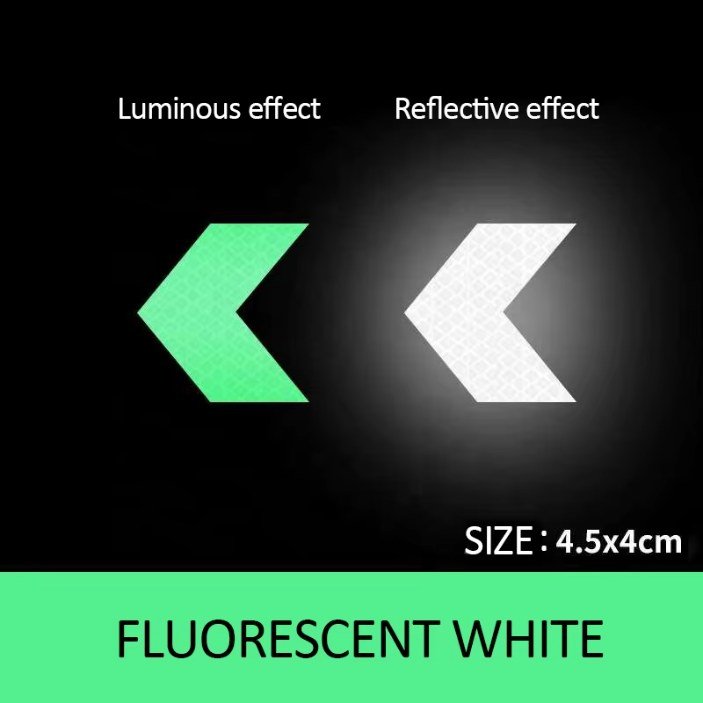
Reflective and photoluminescent materials support visibility in different ways. Reflective materials return incoming light toward its source, making them useful where illumination comes from headlights or another nearby light source. Their appearance depends on lighting and viewing conditions.
Photoluminescent materials absorb light and later emit a glow as ambient light decreases. The available charging light and the time since charging influence their appearance. This makes them relevant where a visible marking is needed during a transition into darkness.
Some projects use both materials in different locations or as parts of a coordinated marking system. Choose each material for its intended role, check applicable project requirements and assess samples in the actual lighting environment before deciding on a specification.
Compare the formats before buying
| Product family | What to compare |
|---|---|
| Reflective tape | Marking width, color sequence, reflective construction, adhesive and application surface. |
| Reflective sheeting | Sign grade, roll dimensions, substrate and printing or cutting compatibility. |
| Photoluminescent tape | Charging conditions, afterglow data, tape dimensions, printed symbols and adhesion. |
| Photoluminescent film | Film construction, roll or sheet dimensions, afterglow performance and conversion method. |
Does reflective tape glow without a light source?
Reflective performance depends on incoming light. Do not specify a reflective product as a replacement for a glow-in-the-dark product simply because both appear bright in a photograph. Ask which optical mechanism the selected model uses.
Is a glow photograph enough to compare two products?
No. The light source, charging time, camera exposure and time after charging affect the image. Request comparable product data and assess samples under the lighting conditions expected at the installation site.
Three purchasing examples: match the material to the light
Vehicle or barrier markings illuminated by headlights: compare reflective tape by color pattern, width and surface compatibility. Our red/yellow reflective tape sample guide shows a 50 mm × 50 m PVC construction with PET protective film and two reflective colors. Use the actual photos and specification table to discuss a matching sample.
Signs and labels made from roll material: review PET honeycomb prismatic reflective film for its adhesive construction and available formats. Send the sign substrate, finished dimensions and printing process; confirm compatibility before converting a production roll.
Markings intended to glow after charging: compare PET color glow-in-the-dark tape. Ask for charging conditions and afterglow data for the selected model, then assess a sample in the intended setting. An afterglow duration label alone does not describe the brightness throughout that period.
When comparing supplier quotations, use the same dimensions, material construction and packaging. Our reflective tape price comparison checklist explains which details change the quotation.
What should I send for a quotation?
Send the product link, installation surface, required dimensions, color or artwork, quantity and destination. Add any project specifications. Xingyuan can then discuss the selected material, sample arrangements and order details. Use our B2B quotation checklist or contact sales@reflecfilm.com.